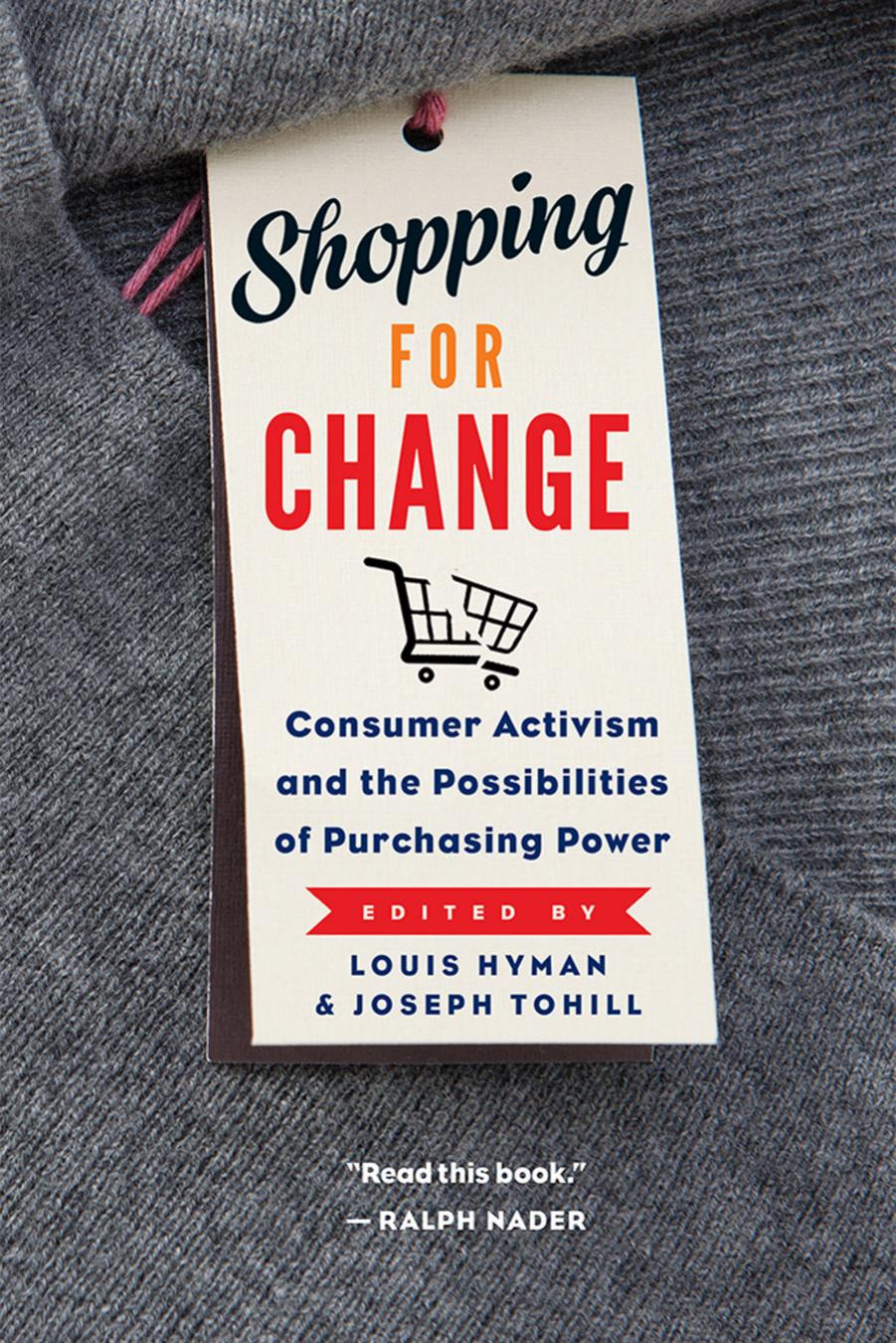
Shopping for Change by Louis Hyman
Author:Louis Hyman
Language: eng
Format: epub, pdf
Publisher: Between the Lines
The Birth of the Safe Cosmetics Campaign
In the U.S., personal care products are part of a $50 billion industry, yet there is no meaningful regulation ensuring that these products are free of chemicals linked to cancer, reproductive harm, and other serious health problems. The health dangers posed by these products thus provide a powerful example of the need for overhauling federal chemicals policy. The U.S. Food and Drug Administration (FDA) lacks the authority to require basic health testing of personal care product ingredients before they are released into the market. Unlike food or drug manufacturers, a cosmetic maker may use almost any raw material as an ingredient in their products (with the exception of colour additives and nine specific chemicals) without approval from the FDA. In the event that a product or ingredient appears to be hazardous to health, the FDA has no authority to require a product recall. Instead, the agency can request that the company issue a voluntary recall or can take the issue to court.17
To fill the void left by insufficient governmental oversight, the cosmetics industry (in negotiations with the FDA) formed the Cosmetics Industry Review (CIR) panel in 1976. Funded by the Cosmetic, Toiletries, and Fragrance Association, the industry’s trade association, the CIR gives the appearance of an effective regulatory body, with a panel of seven scientists and physicians. However, CIR safety suggestions are not mandatory. Furthermore, the Environmental Working Group (EWG) estimates that the CIR panel has failed to assess 90 percent of cosmetic ingredients in use today. In fact, many products violate the few suggestions that have been made.18
For some environmental advocates, the presence of hazardous substances in cosmetics and personal care products represents an opportunity to connect the public as consumers in a more personal manner to the larger movement to reform chemicals policy. The average American woman uses twelve personal care products per day, resulting in exposure to over 120 chemicals.19 These dangers are not restricted to women, as the average American man uses six personal care products per day containing over eighty different chemicals. More than one in five of these are chemicals linked to cancer. In Canada alone, the men’s personal care industry is worth more than $690 million, and is growing by an average of 2 percent every year. A recent Canadian study of seventeen common men’s products (including aftershave, body wash, shaving cream, and deodorant) found chemicals linked to cancer, birth defects, sperm damage, obesity, asthma, and other chronic health problems. These products also commonly contain phthalates, a group of chemicals linked to testicular cancer, the most common cancer among men 15–29 years old.20
At the first meeting of the National Alliance for Cancer Prevention, pioneered by the Breast Cancer Fund in 2003, several organizations agreed to mobilize around the issue of toxins in personal care products. This project launched at the March for Women’s Lives in 2004 under the name “Because We’re Worth It: The Campaign for Safe Cosmetics” (later shortened because of copyright concerns from the L’Oréal company, whose slogan “Because You’re Worth It” inspired this early language).
Download
This site does not store any files on its server. We only index and link to content provided by other sites. Please contact the content providers to delete copyright contents if any and email us, we'll remove relevant links or contents immediately.
| Anthropology | Archaeology |
| Philosophy | Politics & Government |
| Social Sciences | Sociology |
| Women's Studies |
The Secret History by Donna Tartt(19297)
The Social Justice Warrior Handbook by Lisa De Pasquale(12224)
Thirteen Reasons Why by Jay Asher(8998)
This Is How You Lose Her by Junot Diaz(6955)
Weapons of Math Destruction by Cathy O'Neil(6365)
Zero to One by Peter Thiel(5867)
Beartown by Fredrik Backman(5839)
The Myth of the Strong Leader by Archie Brown(5552)
The Fire Next Time by James Baldwin(5503)
How Democracies Die by Steven Levitsky & Daniel Ziblatt(5271)
Promise Me, Dad by Joe Biden(5190)
Stone's Rules by Roger Stone(5130)
A Higher Loyalty: Truth, Lies, and Leadership by James Comey(5017)
100 Deadly Skills by Clint Emerson(4972)
Rise and Kill First by Ronen Bergman(4838)
Secrecy World by Jake Bernstein(4798)
The David Icke Guide to the Global Conspiracy (and how to end it) by David Icke(4771)
The Doomsday Machine by Daniel Ellsberg(4551)
The Farm by Tom Rob Smith(4550)
